

Second Books
This one has a weird amount of vomit metaphors

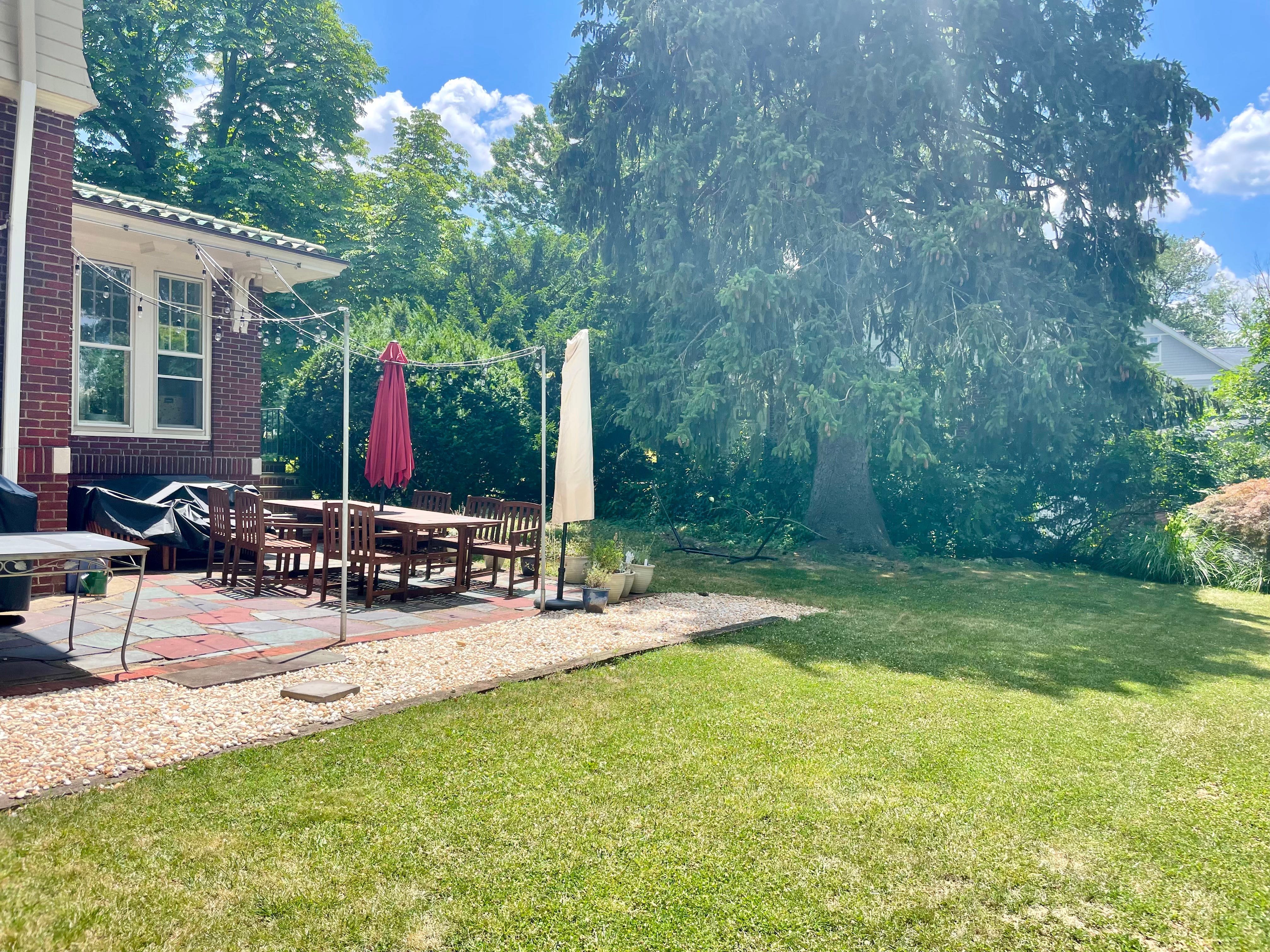
This week, my friend Zack came over for an impromptu afternoon backyard visit. We snacked on peach pie from the local bakery while my daughter actually did a good job playing by herself. It was divine, truly divine, to talk to an adult about adult things, namely books.
Zack and I were delighted to discover that we’d both read Taffy Brodesser-Akner’s second novel, Long Island Compromise. I liked it more than Zack did, but we both, I think, respected Taffy’s project with the book. And either way, Zack pointed out what a difficult task it must have been, to write a second novel when your first effort was a monster smash hit like Fleishman Is in Trouble.
I very much relate to that idea this week. To be clear, I’m not talking about the success part. Just the second novel being tough part. I have no success to live up to, but I am wondering about second book process, and how different it might feel from your first.
It took me three years to write my first book. This was my process:
-Did a bunch of short story writing to see what stuck.
-Wrote a first draft of a novel.
-Outlined.
-Wrote a second draft.
-Reoutlined.
-Wrote a third draft.
That first draft was a vomit draft, and not one word of it ended up in my third draft. The villain was sort of the same, and I happened upon an absurd character named Tammy who is one of my favorite weirdos I’ve ever created, but everything else, from the magic system to the love interest, changed.
This summer, I tried to write my second novel without doing that vomit draft. I attempted to outline the entire book first. This is, after all, what I do with my scripts. But I found it wasn’t possible. A book is too vast to outline the story without writing words on the page first.
I know some screenwriters also have to write script pages as they’re outlining. I’m not sure why I was never one of them- I think I felt like the actors and director and cinematographer would end up bringing so much to the script eventually, that all I had to do was architect the shit out of that first episode story. Nail thirty pages of beats and character relationships. But for a book, I’m responsible for every aspect of production. My imagination simply isn’t large enough to invent everything necessary for a full outline of a novel while keeping the details in my head. There’s so much more in a novel than there is in a script. Literally, more words, and figuratively, more, because a script is not the finished product. What clothes does your protagonist feel most comfortable in? Does the love interest have dimples? What furniture is in the villain’s living room? I am now the costume department, casting agent, and set designer. And yeah, I might have had an idea of what those things were like in my scripts, but I didn’t know exactly. I can’t come up with Tammys just by outlining.
So, vomit draft it is. I’m writing it, and feeling a bit despondent. Not because it’s shitty. Of course it’s shitty! Or, vomitty, rather. It’s a vomit draft. I’m feeling despondent because this time I am so painfully aware that none of this will be used. And it’ll still take six weeks. If it goes well.
When I wrote my first novel, I was so stupid about how long it would take. I thought I’d be close with that first draft. I was not. But now…now I KNOW I may be writing a scene that takes place at the zoo right now, with sentences about gibbons that are very funny, but they will certainly be cut in the next draft when I inevitably change the location from the zoo to a pottery studio because I need to have my character be at a pottery studio somewhere in act one to pay off something I haven't even thought of yet in act three!! Gah!
How does an author do a vomit draft, when they’re painfully aware that not only are they going to have to kill some darlings, but wholesale mass-murder every single word?!? I’m a genocidal maniac with a stomach bug. This draft feels pointless now. And yet I can’t proceed without it.
I once was lucky enough to be assigned Matt Williams, creator of Roseanne and Home Improvement, as a screenwriting mentor. I was struggling with a project, and he wasn’t sure how to fix what was wrong with my script either. He told me that writing never got easier. Each story was as hard to crack as the first one. I thought he was just being kind.
He was absolutely right. Figuring out a story is a process. This three-draft process feels like it works for me, and I’m guessing it will be how I write almost every one of my books.
But here’s what is easier than when I started:
-I know I’m capable of finishing a novel.
-I know that it’s easier to fix something that exists than nothing at all.
-An idea of a creative project is always better than the finished version, but if you don’t write anything you never finish.
-I know that even when I’m vomiting, my scenes have shape and story and conflict, because that’s just in my bones at this point. I can hold back my own hair.
Readers, have any of you written a second novel? How different was your process from your first? How much has your process changed over the course of your writing life? Asking because it's interesting, but also praying that someone will tell me eventually, one day, I may be able to jump straight into my second draft.
That’s a wish that will never come true, isn’t it? It’s pretty simple, actually. You have to write your first draft. Because it’s a first draft. There is, literally, no way to skip it.
"I know that it’s easier to fix something that exists than nothing at all." I am also learning this, soooo slowly. (Me, most of the time: here is good advice! it applies to everyone else in the world but not me.)
A little thing I say to myself, occasionally, working on my own second book: 'take the time you need, use the time you're given.' Those vomitous six weeks spent on a first draft will pass one way or the other, so we might as well do something with them. (Again, better at saying this to myself in a wise voice than in actually listening, but maybe if we say it back and forth to each other it'll work.)
I love this process meditation! So spot on. I feel like there's a 'maturity' in knowing that you have to do a lot of stuff that won't work to get to a better place. I say maturity, because I feel like when I was younger, I would have a big push of an idea and then despair when it didn't work out right away. Now I tend to buckle up and head into the uncertainty. Sometimes I will paint a watercolor knowing full well that it might not work and I'll just have to start over (can't paint over anything in watercolor!).
Anyway, I love this. Looking forward to your book about the writing process / narrative craft someday (alongside your novels)!!